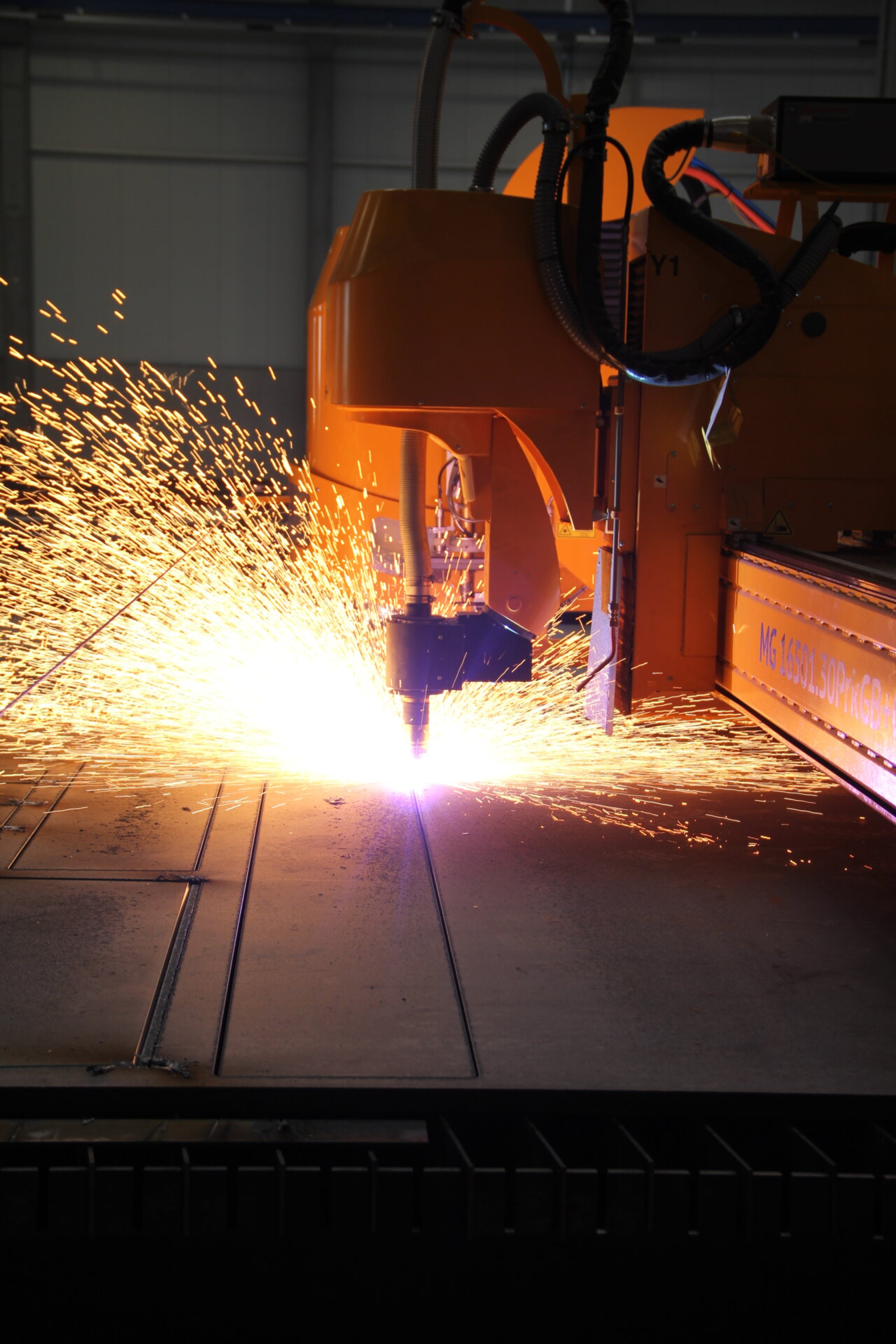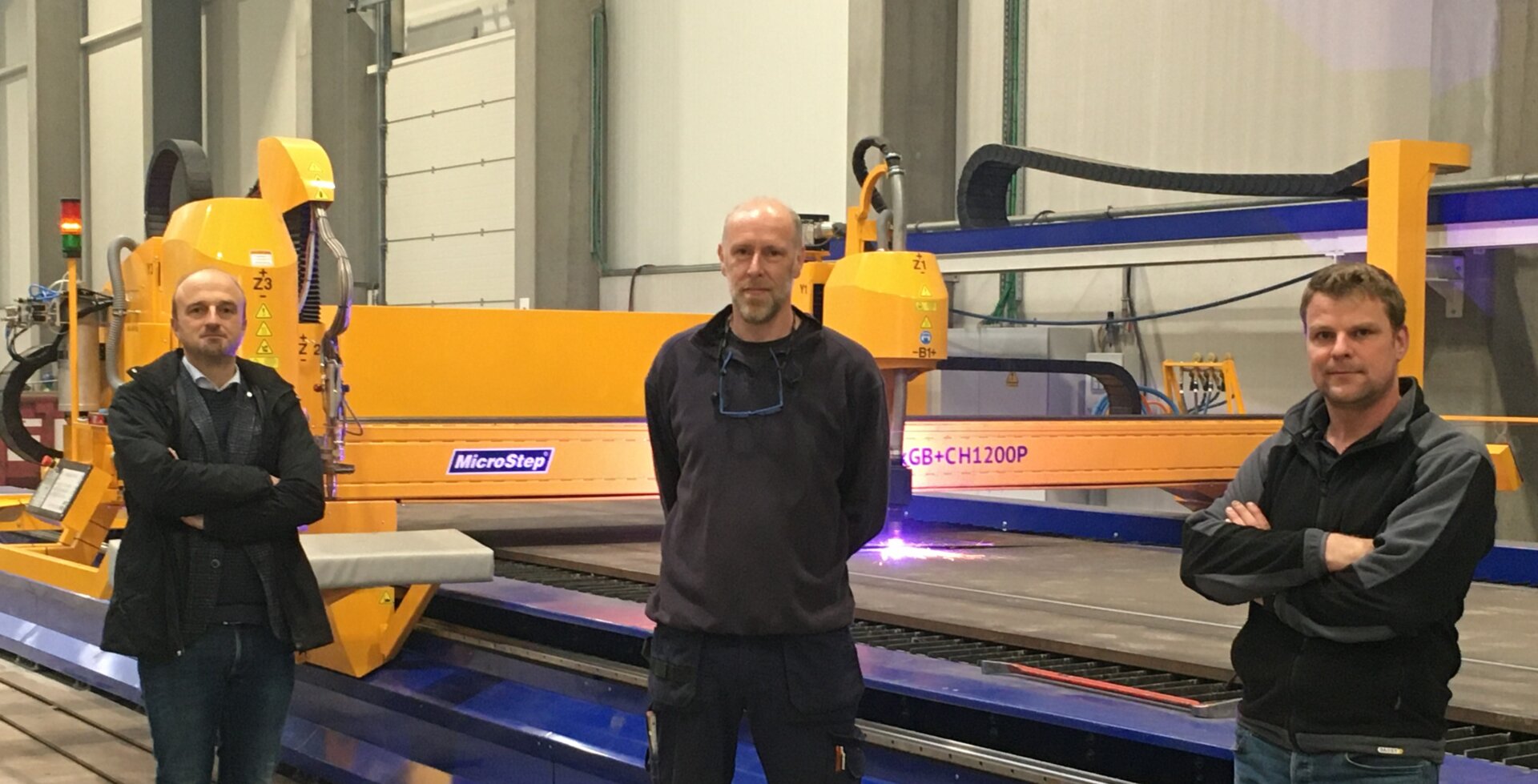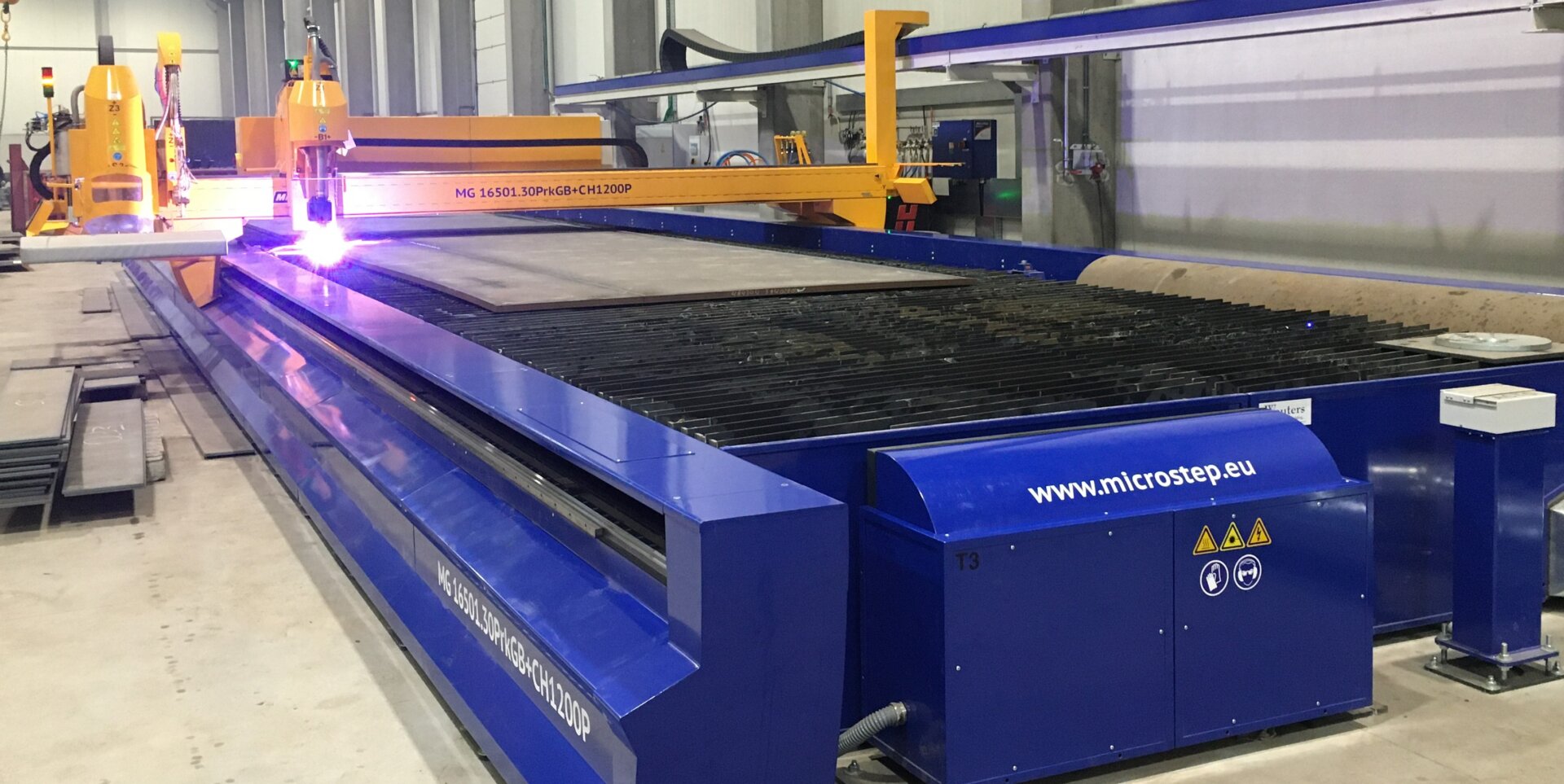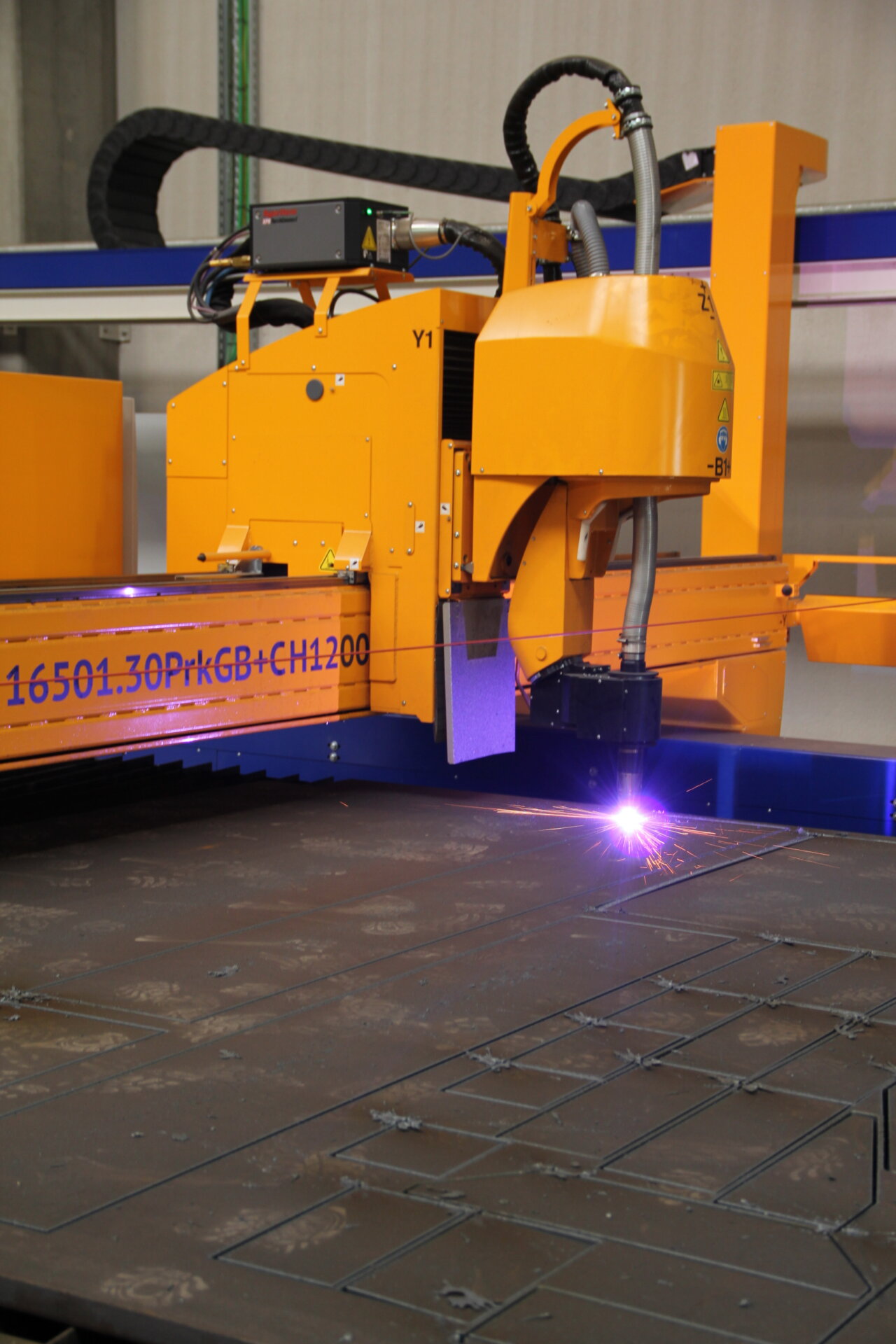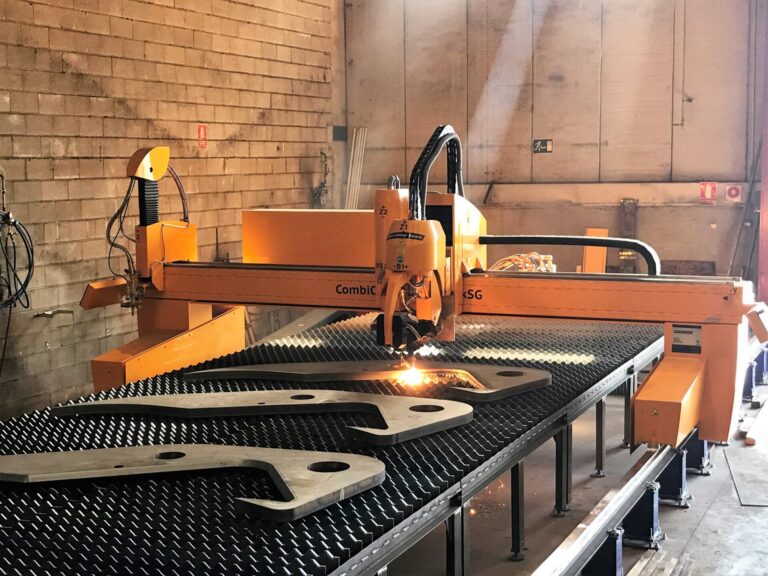


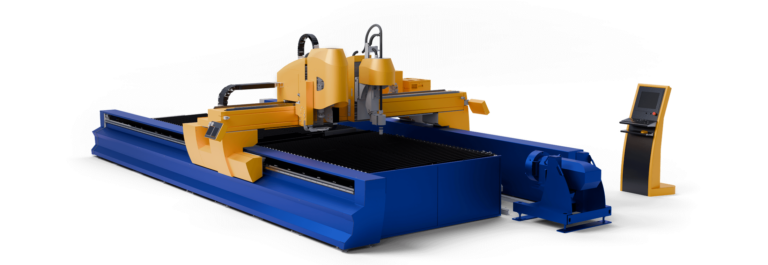
The versatility of Almex’s MicroStep plasma cutting machine takes this approach to a new level. Few manufacturers offer a machine that combines plasma cutting with such a wide range of other processes and technologies. In addition to plasma and oxyfuel cutting, the machine can process pipes up to 1 metre in diameter and weighing up to 9 tonnes. This exceptional versatility has helped Almex take its production efficiency to the next level.
Supporting Civil Engineering Projects
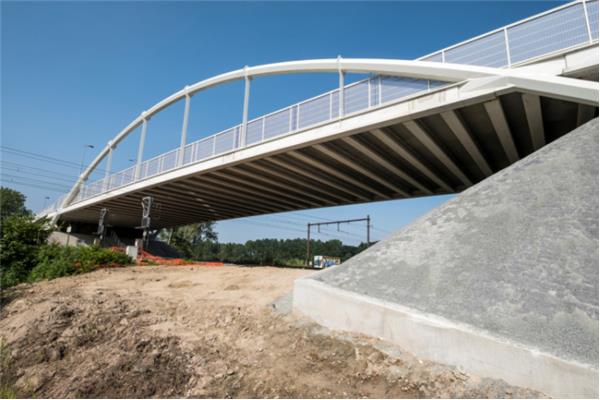
Almex is a steel construction company specialising in civil engineering projects. Its work includes flood barriers, bridges, industrial facilities and a wide range of infrastructure. The company welcomes complex engineering and manufacturing challenges and has the expertise to deliver them.Two examples are the storm surge barrier in Wenduine, Belgium, and the pedestrian bridge at Antwerp’s Schijnpoort metro station. Almex delivered both projects from start to finish, taking care of the engineering, manufacturing and on-site assembly. Projects of this scale demand exceptional standards of quality, safety and scheduling.
As a supplier working to tight deadlines, Almex must be able to respond quickly and flexibly to urgent requests and unexpected orders. Its teams in the Belgian cities Essen and Hoogstraten work to demanding schedules. For example, they may know well in advance that a bridge must be assembled between 1 a.m. and 5 a.m. on 13 February. This illustrates just how precise and demanding the company’s project schedules can be.
Almex’s EXC 4 Expertise
The move from Essen, Belgium, to a facility in Hoogstraten that is six times larger reflects the company’s rapid growth in recent years. The additional space was essential: as projects grew in scale, so did the workpieces. The new facility also features six overhead bridge cranes, each with a capacity of 16 tonnes – three in each of the building’s two sections.
What has driven this growth? Dirk Peeters, who recently took responsibility for the sheet metal processing division, points to the EN 1090 standard, which brought major changes to the construction industry in 2014. The European standard introduced new requirements for both administration and CE marking (EN 1090-1), as well as technical execution (EN 1090-2).
One important change was the introduction of four execution classes, from Class 1 (the lowest) to Class 4 (the highest). The higher the class, the more demanding the projects a company can undertake, and the stricter the requirements it must meet. Class 4, for example, requires full traceability. Not every company can meet these requirements, so fewer suppliers are able to operate at this level.
Almex set its sights on EXC 4 from the outset, and the company is now seeing the benefits. Following the bridges in Oostkamp and at Schijnpoort (both in Belgium), another cycle and pedestrian bridge is currently under construction.
“In the past, all the cut parts were delivered in one batch. We could not start welding or assembly until the entire batch had arrived. Now, as soon as the first plates have been cut, the assembly team can get to work. We also save considerable time on sorting because the parts no longer arrive all at once.”
Cutting In-House
Almex’s decision to bring cutting in-house led directly to its investment in a MicroStep plasma cutting machine, supplied in Belgium by Wouters Cutting & Welding. The demanding requirements of EXC 4 were another important factor.
Gert Neelen, owner and managing director of Almex, explains the decision: “When you manage production in-house, you have greater control over quality. That is particularly important at the level we work at. For example, we need the weld edges to be prepared in a specific way. Bringing cutting in-house also makes our production more efficient. Previously, all cut parts arrived in one batch, and we had to wait for the entire delivery before we could start welding or assembly. Now, the assembly team can begin as soon as the first plates are cut. We also spend much less time sorting parts because they no longer arrive all together.”
There were other benefits, too. Remember those tight deadlines? By managing all three core activities – engineering, manufacturing and assembly – in-house, Almex can coordinate projects more effectively and respond quickly when plans change. Above all, this helps the company keep projects on schedule.
A Machine with Exceptional Capabilities
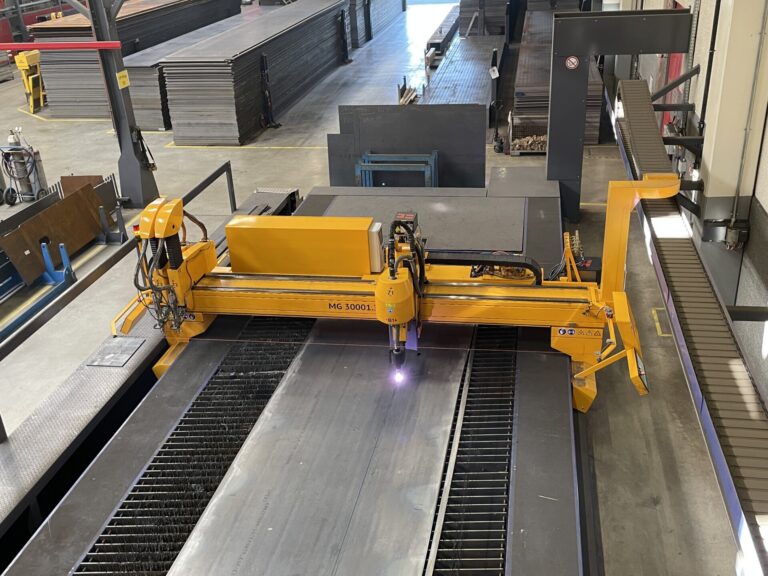
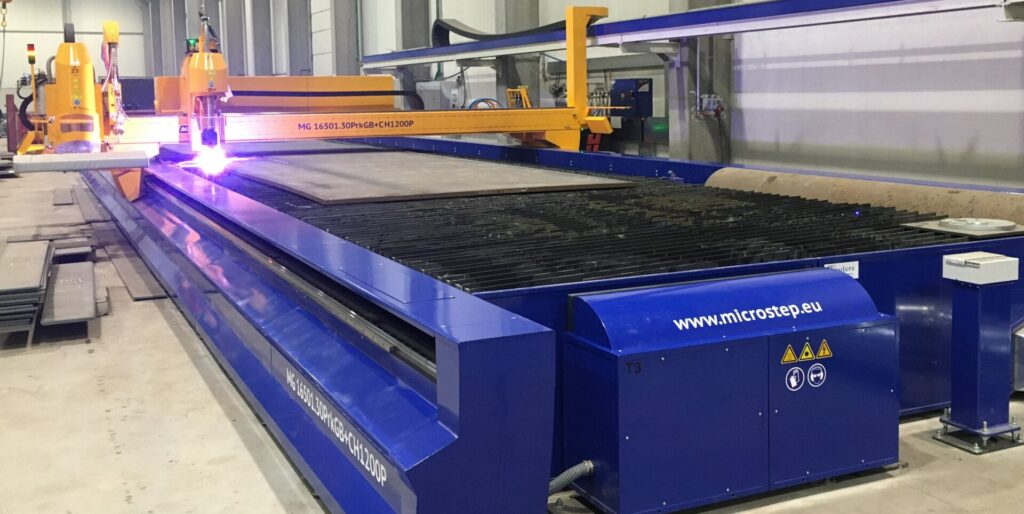
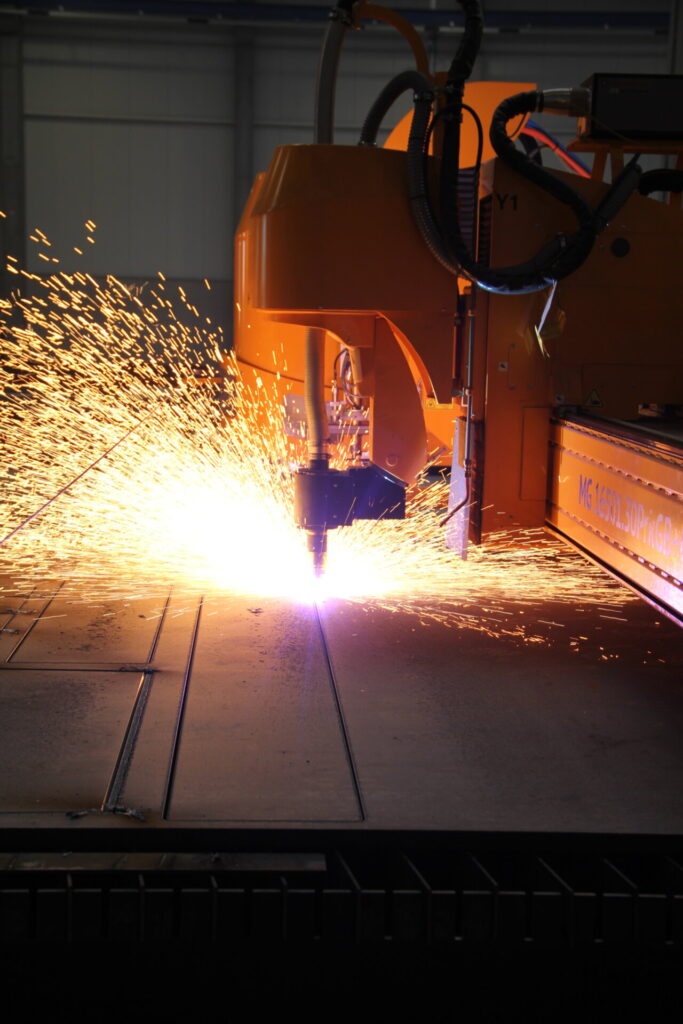
Given the nature of Almex’s projects and its company culture, the new plasma cutting machine had to deliver more in every respect: cutting quality, working dimensions, flexibility and the ability to combine different processes. This is where Wouters Cutting & Welding, MicroStep’s Belgian partner, came in. Dirk Peeters explains the capabilities of the selected machine: “The machine has a working area of 16.5 × 3 m for cutting flat plates.
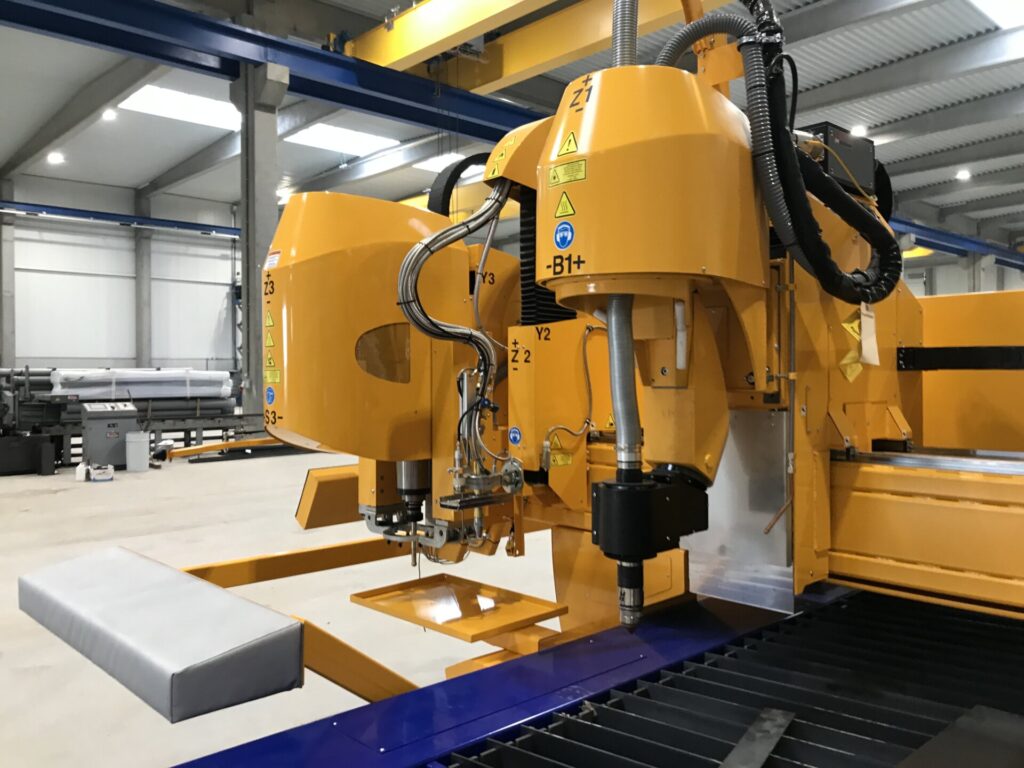
Its 4-point chuck also enables it to cut pipes and profiles up to 1 m in diameter and weighing up to 9 tonnes. The Hypertherm XPR plasma source delivers 300 A of cutting power. In theory, we can cut plates up to 80 mm thick with plasma, but 50 mm is the most economical limit. For thicker material – up to 150 mm – we switch to the machine’s oxyfuel cutting technology.”
“Bevel cutting, for example to prepare edges for welding, is straightforward thanks to the cutting head’s ability to tilt by up to 50°. The machine also has a calibration station at the front, which makes calibration much faster. We attach a probe to the cutting head, and it performs a series of rotational movements to record the measurements.
The system measures any deviations and, provided they are within the specified tolerances, the machine’s software compensates for them automatically. This ensures accurate cutting at the bevel head’s pivot point. The calibration station can also measure drill-bit lengths, which is useful because the machine is equipped with a separate drilling unit.
The combination of all these processes and technologies is what makes the machine special, particularly for the range of cutting work we need to carry out.” The machine is also equipped with a tool magazine at the front, which holds up to eight drill tools. They are changed automatically in just a few seconds.
“Bevel cutting, e.g. for weld edge preparation, is hassle-free thanks to the cutting head that can tilt up to 50°. In order to calibrate it quickly, the machine is equipped with a calibration station at the front. As a result, we lose much less time manually adjusting the cutting head.“
Tailored to Almex’s Needs
According to Nic Wouters of Wouters Cutting & Welding, MicroStep’s advantage lies not only in combining different technologies, but also in its ability to customise machines to meet each customer’s needs. The Almex installation was no exception. Nic Wouters explains: “To accommodate pipes and profiles up to 1 m in diameter, part of the workshop floor had to be lowered. The machine’s design and installation were therefore planned in close cooperation with the customer.
This also involved positioning the power source and installing the cable chain above the machine. Cable chains are usually placed on the floor next to the machine. In that position, operators may inadvertently step on them, potentially shortening their service life. We also installed the fume extraction system beneath the floor. The cutting table extracts the fumes, oxides and particulate matter, which are then processed by a Donaldson filtration unit before the cleaned air is discharged outside.
This allows the machine to cut with virtually no visible smoke.”
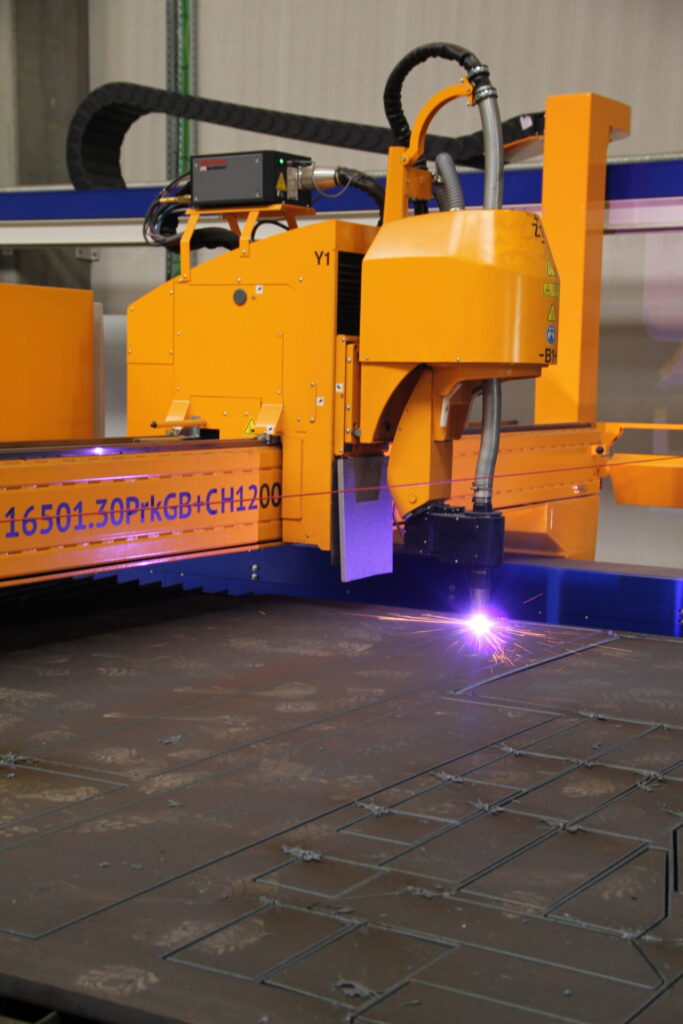
The plasma cutting machine had been in operation for just one month when the initial results were already very positive. Dirk Peeters comments: “The machine’s cutting quality is beyond question, its programming is intuitive, and the combination of technologies gives us the opportunity to take our production efficiency to a new level.” It certainly sounds like a worthwhile investment.